
Related Tags
Featured Deal
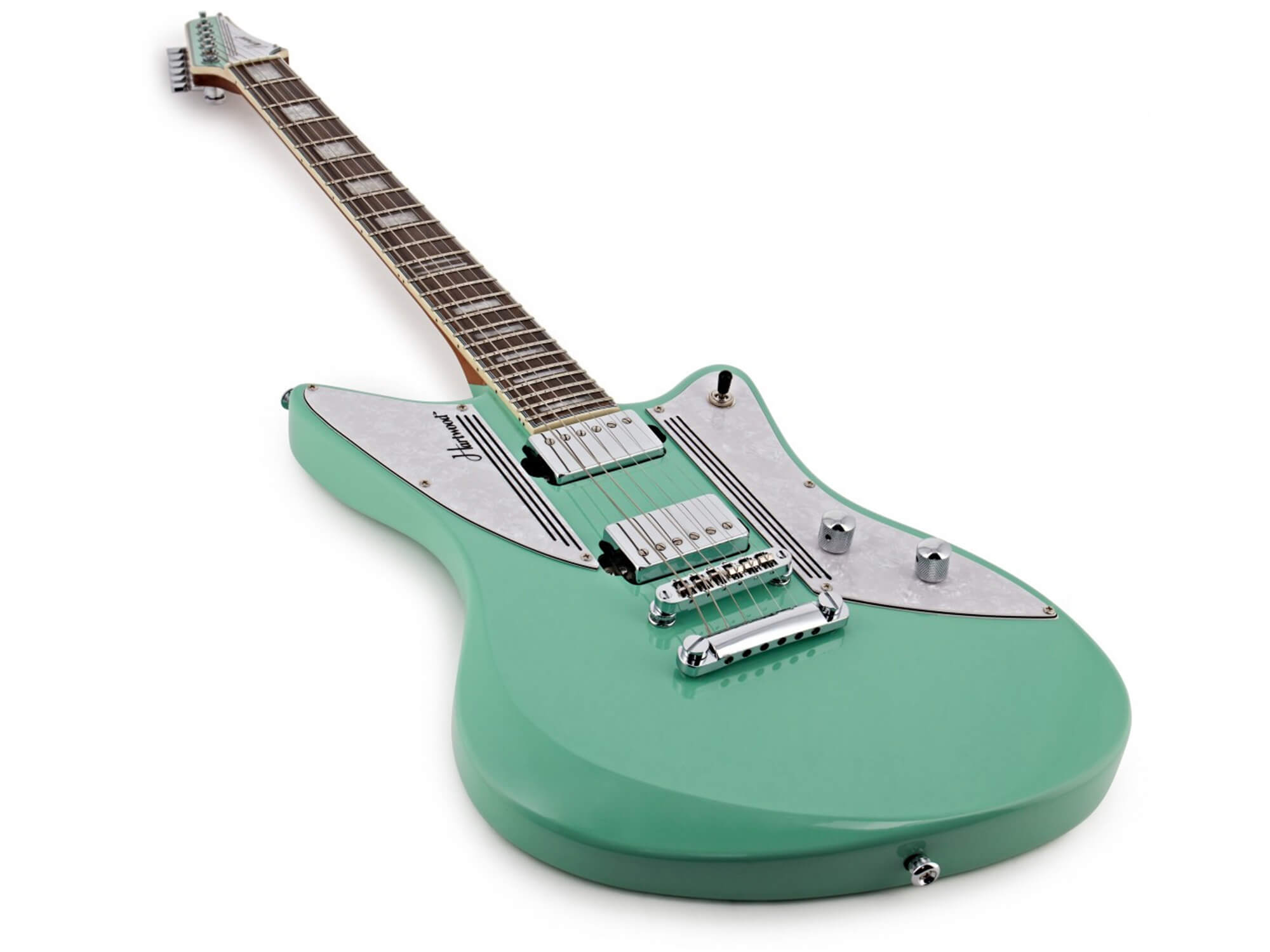
Gear4Music Visionstring 3/4 review: the best short-scale starter pack guitar out there?
With some vibey looks, reasonable playability and absurd price, this might just be one of the coolest guitars out there for a younger beginner

Gear4Music Visionstring 3/4. Image: Press
Review Overview
Our rating
7
Our verdict
⊕ Great looks
⊕ Good playability for the price
⊕ Lightweight build
⊖ Less-than-stellar QC, including some rough edges and chipping on the laminate fretboard
⊖ Included amp isn’t great
With some vibey looks, reasonable playability and an absurdly low price, this might just be the ideal do-it-all pack for a younger beginner.
Today's best Gear4Music Visionstring 3/4 deals
£100, only at Gear4Music
Experienced guitar players may wince upon reading the words “guitar starter pack”. They recall uncomfortably vivid memories of miles-high action, sharp fret-ends and fizzy amp sounds. But that was then. The step up in quality of affordable instruments that we’ve seen over the last few years, I think, now warrants the question: what is the guitar starter pack experience like for a new player in 2025?
To go some way in answering that, let’s take a gander at the Gear4Music Visionstring 3/4. It caught my eye because it’s pretty damn cool to look at – its body shape is clearly Strat-indebted, but also has some flair of its own that seems different to other affordable S-types. So how does it fare as a financially approachable instrument to get started on?
What is the Visionstring 3/4?
As the name states, this is a 3/4-scale instrument. This means that the vibrating length of the string, between the bridge and the nut, is 22.5 inches, rather than the ‘full’ scale length for this style of instrument – 25.5 inches. Therefore the frets are closer together, and the strings are easier to press down on – ideal for the smaller hands of younger learners.
The bridge is a hardtail, meaning no Jimi Hendrix-style dive-bombing here. But vibrato units on guitars this cheap are almost always more trouble than they’re worth, and regularly a nightmare to keep in tune. In the same straightforward spirit, there’s also only one pickup and one volume control.
The guitar’s body is made of paulownia wood – it’s fairly rare to see on guitars, but is incredibly light. Again, not a bad thing for the younger learner. The neck is maple and the fretboard is an oiled poplar laminate that, at a distance, could maybe pass for rosewood. And that’s about it, as far as the specifications that matter.

In Use
Taking the guitar out of its box, I’m first struck by that weight – a trip to the scales tells me it’s only about 1kg/2.2lbs. That paulownia body is indeed featherweight. Nevertheless, on a strap the guitar does balance very well, and is generally pretty comfortable to hold and strum. The forearm carve is quite small, but because of where the bridge is placed on the body, it works just fine in the most natural playing position.
With a guitar that costs less than £100 (with an amp), there are certain things that tip the scales between “cheaply-made but playable” and “firewood”. Most important of these are the fret-ends. When I run my fingers along the edge of the fretboard, the wood itself is pretty rough (more on that later) but nothing starts bleeding – the actual metal fret ends are all seated properly.
Next – tuners. Here, they work, but they’re stiff in places, and there’s one or two points where they bind a little. But they do get things up to pitch and keep them there without failing. The nut is, unsurprisingly, pretty roughly cut, tight on the strings and a little too high – it does the job, but the sort of setup work it realistically needs is a bit beyond the average beginner’s wheelhouse.
The bridge is in the right place and the intonation is pretty good across the board, only being a bit sharp on the low E. What does this mean? Well, if you play the open string (or the harmonic on the 12th fret), and then play the 12th fret, those two notes should be exactly the same, or exactly an octave apart. If the intonation is off, the fretted note will be a little sharp or flat in comparison. Fixing it involves moving the guitar’s saddle backwards or forwards – on the Visionstring, it’s easily done with a screwdriver. But if you’re a total beginner you likely won’t want to mess with things – so it’s good that it’s close enough off the bat. Less good is the slight rattle – the height adjustment screws are pretty
Finally, the pickup. It’s a Strat-style single coil wired to a volume control and nothing else. It’s also not quite as close to the bridge as a standard Stratocaster bridge pickup might be, meaning it’s not quite as bright as it could be. Given that it’s your only option, this is a pretty welcome adjustment. The result is actually a fairly good sound – I’ve definitely heard worse pickups, and here the trademark brittle character of a cheap single-coil isn’t that much of an issue. Through my own Orange OR15, it does a great job of punchy overdrive tones and even reacts well to some vintage-style fuzzes. Cleans are a little muddled and unclear, but this isn’t a guitar that needs to be judged on its high-fidelity string separation.
The included amplifier is sadly rather fizzy (if impressively loud). Thanks to the recent boom in affordable and beginner-friendly amplification solutions, you’d almost wish that it didn’t come with it, leaving you free to grab something like a Fender Mustang Micro Plus or a Positive Grid Spark Go. Ultimately it’s an important inclusion for those not quite ready to shop around for a pricier amp – it will do the job until you’re confident enough to make that investment in a ‘real’ one.
Is the Visionstring 3/4 easy to play?
When it comes to the all-important playability, I’m impressed. Most importantly there are absolutely no places on the neck where the strings choke out. There’s minimal fret buzz too – almost a miracle at this price point. The action (how high the strings are from the fretboard) is maybe a little higher than I’d like, but it’s usable – plus, the shorter scale length means less tension, so it’s less of a battle to press the strings down. And let’s be realistic: no one is buying this guitar to do 220 bpm sweep arpeggios on it. To succeed, it just needs to mainly get out of your way.
And that it does. As a beginner the last thing you’ll want when you’re learning to play is a guitar that actively fights you or stops notes dead. And while that may seem like a low bar to clear, corners will inevitably have to be cut to create a guitar this affordable – the Visionstring 3/4 avoids doing so in the most important places.

So what’s the catch?
There are some obvious problem areas, as you’d expect. The fretboard is one – because the laminated poplar is a pretty soft material, strands of wood are fraying and chipping along the edge. The softness does mean you’re unlikely to get any splinters from it, but it’s definitely something you can feel as you run your hand up and down the neck.
The pickguard material is also dirt cheap – after the initial plastic peel, another layer was also starting to come loose – the stuff that gives the guard its glossy appearance. It was lifting and peeling around the screws, and was also showing a lot of scratches and marks after only a few hours of play.
The back of the neck is also slightly unevenly carved, and the finish is slightly rough. Nothing to the point of actual discomfort – it has that thin satin finish you’ll find on basically every guitar at this end of the market, but feels like it skipped the final polish phase. The good news is that even a few hours of playing started to buff out the worst of the gritty feel, and after a couple of days with the instrument it was much nicer on the palm.
Is the Visionstring 3/4 worth it?
Because it’s one of those timeless, universally-recognised guitar designs, a lot of starter-pack guitars are fairly faithful Strat-style things. Meaning: whammy bars, three pickups, two tone controls and a five-way switch. This is all well and good for the budding Hendrix acolytes out there, but it’s refreshing to see the Visionstring strip things back to the absolute basics: a hard-tail bridge, a single pickup, one volume control and nothing else. It puts the focus on the playing rather than trying to cram a “full” guitar experience into an instrument that costs less than £100, amp included.
For those among us who have been playing for a good few years, it’s important to remember just how confusing the working bits of an electric guitar can be. You can be a good way into your guitar journey before you really understand, intuitively, why a bridge pickup is brighter than a neck pickup, the point of a tone control, how to change strings without totally ruining your vibrato’s setup and so on – so maybe it’s no bad thing to get started on a guitar that says, “don’t worry about any of that – just get playing”.
Having started myself on a Strat copy (and a total dud of one, too), I kind of wish my first guitar was this straightforward and fun to play. I did genuinely enjoy my time with the Visionstring, and often found myself picking it up as a fun change in pace. It rewards being messed about on, and actually played – an incredibly important thing for any budding guitarist!
Visionstring 3/4 alternatives
Of course, Gear4Music does still make the obligatory full-sized Strat-inspired starter pack in the form of the LA Electric Guitar (from £69.99) if that’s more your thing. And most of the retailers with house brands do also offer 3/4 scale instruments of a vaguely Strat-esque persuasion, including Thomann’s Harley Benton and Andertons’ EastCoast.

Cillian is Guitar.com's Senior Staff Writer. They have written news, features and reviews for Guitar.com since 2019. When not writing about guitars, Cillian spends their time building and modding pedals, and playing drone-doom in their band Epimetheus.