
Related Tags
Scalpers are ruining the fun for real guitarists – and now I have the data to prove it
Despite being limited to just 1,985 units worldwide, Epiphone’s Back To The Future guitar was Reverb’s best selling new guitar of 2025 – and reveals the extent of guitar’s scalping problem.

Image: Epiphone
Featured in this article
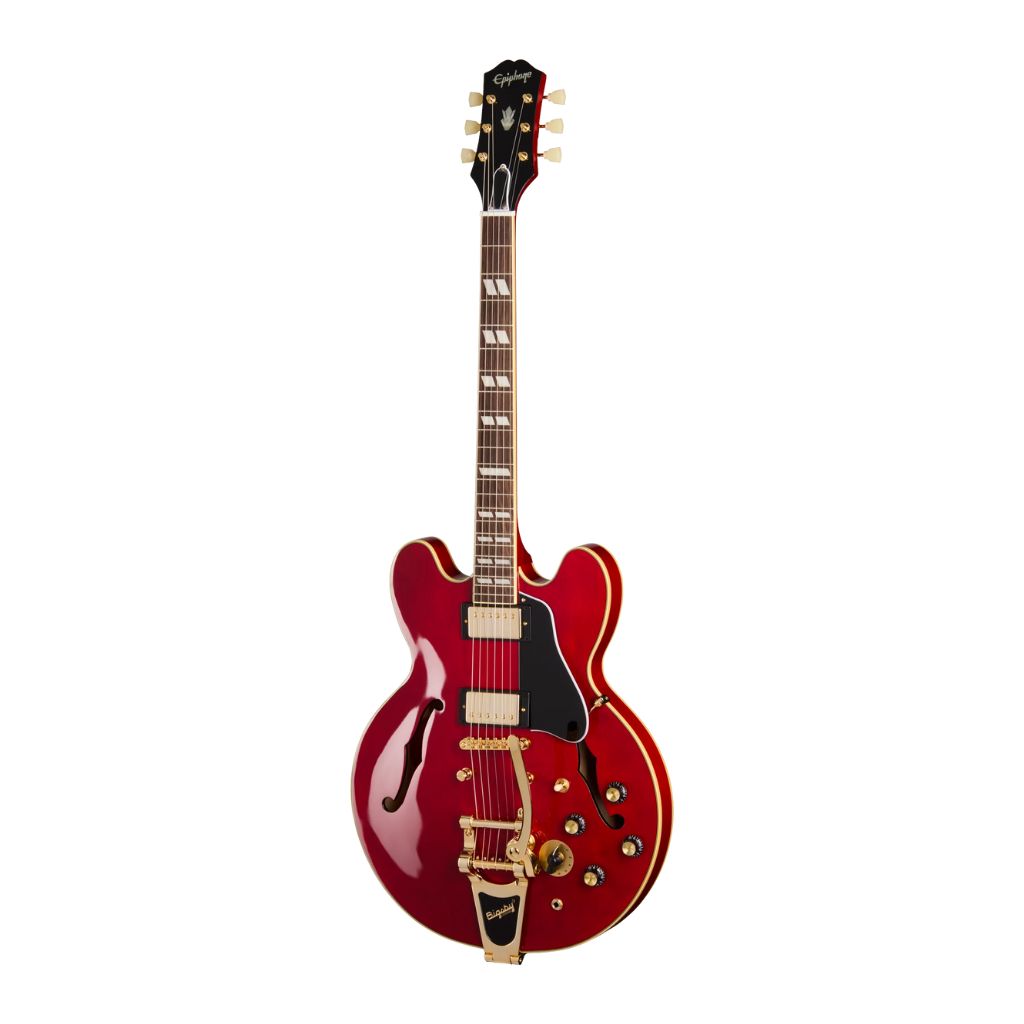
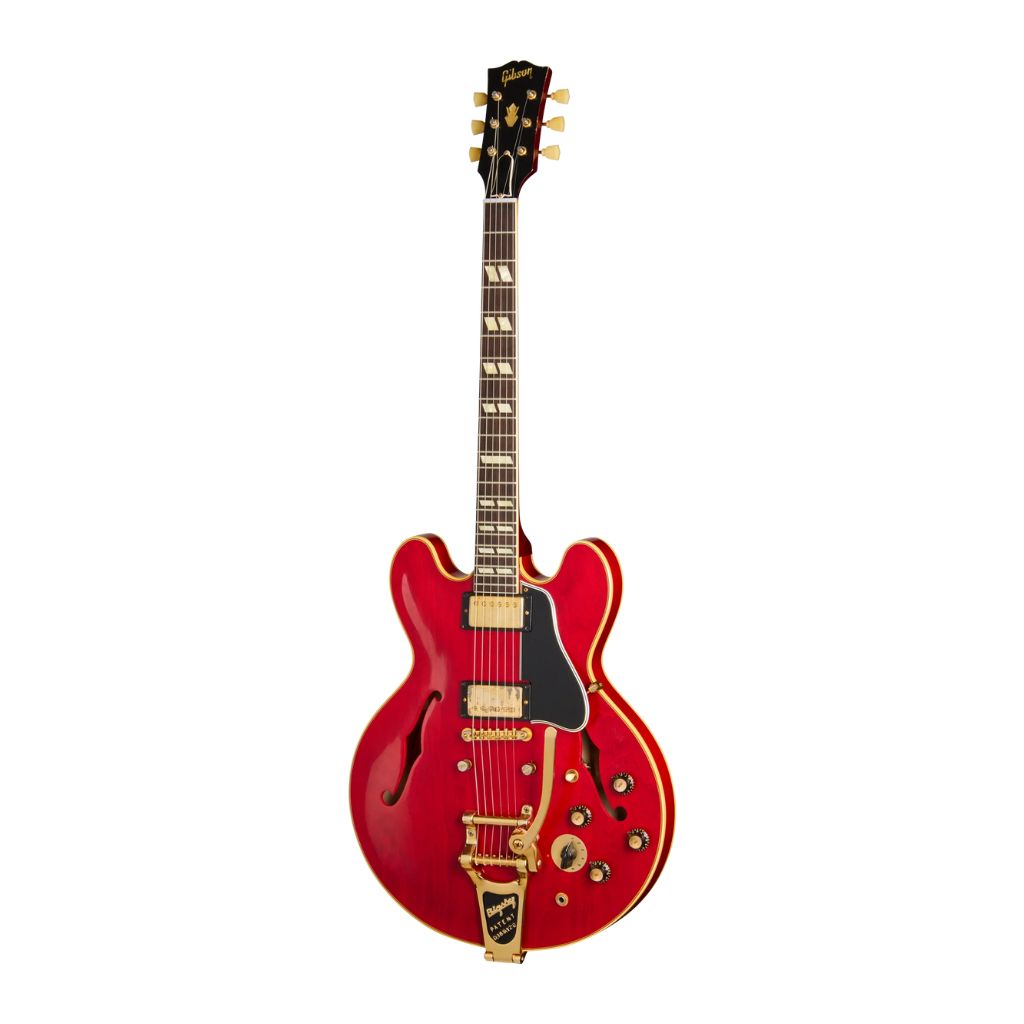
In one of the many ways that I am crushingly unoriginal as a guitar player, Back To The Future is a Very Big Deal for me. To call those three movies formative on me probably understates things somewhat.
Among the guitars and sports memorabilia that clutter up my home office, a mini ‘OUTATIME’ license plate sits proudly on my desk, while an Enchantment Under The Sea Dance poster sits framed over my shoulder. So unabashed is my love of BTTF in fact, that when I left Guitarist magazine a decade ago, the traditional ‘leaving cover’ given to departing staff as a farewell saw me expertly photoshopped into the red body warmer of Marty McFly, stepping out of a DeLorean.
All of which is a roundabout way of saying that when, earlier this year, Gibson and Epiphone announced their partnership with the movie to release a pair of commemorative instruments modelled on the mythical ES-345 used by Michael J Fox in the movie, I was paying attention.
The cold financial realities of being a guitar journalist meant that I was never going to be in for one of the 20 grand Gibson models, but the Epiphone version? That might well be in reach… or so I thought.
Because in reality, I would have needed a time machine built out of a DeLorean to get one – by the time I’d umm’d and ahh’d about whether I really needed it (I didn’t, by the way) all 1,985 of them had sold out.
I wasn’t really surprised by that – I doubt you were either. I am far from alone in being a guitar player for whom Back To The Future was hugely important to them. I’ve interviewed a lot of musicians who were born between 1970 and 1990, and by and large it’s more notable when one of them doesn’t cite Marty McFly as a musical touchstone.
And yet in the back of my mind, I knew it wasn’t just that. Genuine fans were buying the guitars, sure – but scores of brand new instruments started popping up on Reverb and eBay with vastly inflated price tags in the following weeks, it was clear that plenty of people had simply bought them to flip for a profit. And it was even worse with the Gibson version.
Scalpers are a fact of life in a culture that has become more and more obsessed with limited-edition drops and artificial scarcity. Whether it’s trying to cop the latest Palace x Nike collab, a Snoopy Moonswatch or god forbid, a Labubu, there will always be people trying to profit in these situations at the expense of people who would just quite like to own the thing in question.

The Scale Of The Problem
But how big is the problem in the guitar world? It’s always been quite hard to quantify – it certainly felt like something that was a growing issue, but how big was it exactly. Well, thanks to Reverb, we can now get a sense of the full scale of it.
As you may be aware, every year Reverb crunches the vast amount of data it holds on the buying and selling of new and used music gear across the globe to provide a list of the best selling products in various categories. 2025 was no different, but as I was perusing the lists this year I saw something that made me do a double-take.
At the top of the best-selling new electric guitars for 2025 was, you guessed it, the Epiphone Back to the Future ES-345. This guitar, which was offered for sale exclusively via Gibson’s own website and a few select dealers – and as a reminder, was limited to just 1,985 units – beat every other new guitar launched in 2025.
And let’s not forget, while Reverb may have got its start as a used gear marketplace, it’s now a place where a huge chunk of the gear sold is new – often by retailers. Don’t be under any illusions – a significant proportion of all the gear sales in the US, Europe and beyond now goes through Reverb.
For this guitar to beat out every single non-limited run new guitar made by Fender, Epiphone, Gretsch, PRS and everyone else this year… try and wrap your head around that. How many of those guitars that were bought must have been flipped for profit to have the BTTF Epiphone standing alone on the podium? It’s mind-boggling.
A glance at the other categories shows some similar red flags – if not quite as brazen. JHS’s troubled NOTADÜMBLË – a 15,000-run pedal kit that was sold exclusively via the brand’s website and discontinued after a month – is sitting pretty at number three in the overall pedal category. Elsewhere, Joe Bonamassa’s 500-run MXR Deep State sold out in a day, but still somehow made the top 10. A quick search of both sees them mainly listed for twice the amount they cost a few months back.

Spoiling Our Fun
But does it really matter? You can argue that it’s capitalism working as it’s supposed to, I guess. But I can’t shake the sense they’re ruining the entire point of releasing products with limited production runs – the fun and excitement of trying to bag one.
Obviously, this isn’t a guitar-specific problem – practically every leisure activity you can think of has to deal with scalpers in some shape or form. StockX exists, for crying out loud. I don’t blame the brands, retailers or marketplaces for this – nobody’s managed to fix this problem for shoes, trading cards or anything else, so expecting guitar to lead the way seems a tad unreasonable.
There’s also nothing wrong with buying something, using it for a bit and then selling it on, of course. If you make a profit on it along the way, good for you. But what I hope we can push back on, collectively, is the normalisation of flipping in guitar culture.

It’s that active desire to buy something with no intent to do anything more than stick it on Reverb for double what you paid for it – that feels quite gross to me. And looking at forums and social media, it seems like a lot of the guitar community agrees.
Perhaps the only way to fight back is to stop giving in to the price-gougers – ask yourself, do you really want that thing so much that you’re prepared to give some chancer double what it should cost to get it?
If we all decided to not play the game, the prices would start coming down because nobody wants a guitar they’re not playing kicking around the house long-term. In the end, that’s what I decided to do.
I was disappointed, sure, but in the months since I can’t honestly say I’ve missed it. Maybe in a few years the prices will come down and I’ll pick one up, maybe I won’t – but whatever happens, I won’t let the scalpers turn something that’s suppose to be fun into something so… heavy?

Josh is the Commissioning Editor of Guitar.com. He's responsible for planning most of the reviews and features you see on the site – and writing a fair chunk of them, too. Josh has been on staff at Guitar.com since 2019, having previously worked at Guitar Magazine, Guitarist and Total Guitar. He has an unending fascination with offsets of all shapes and sizes, and rearranging his pedalboard for no real practical reason.